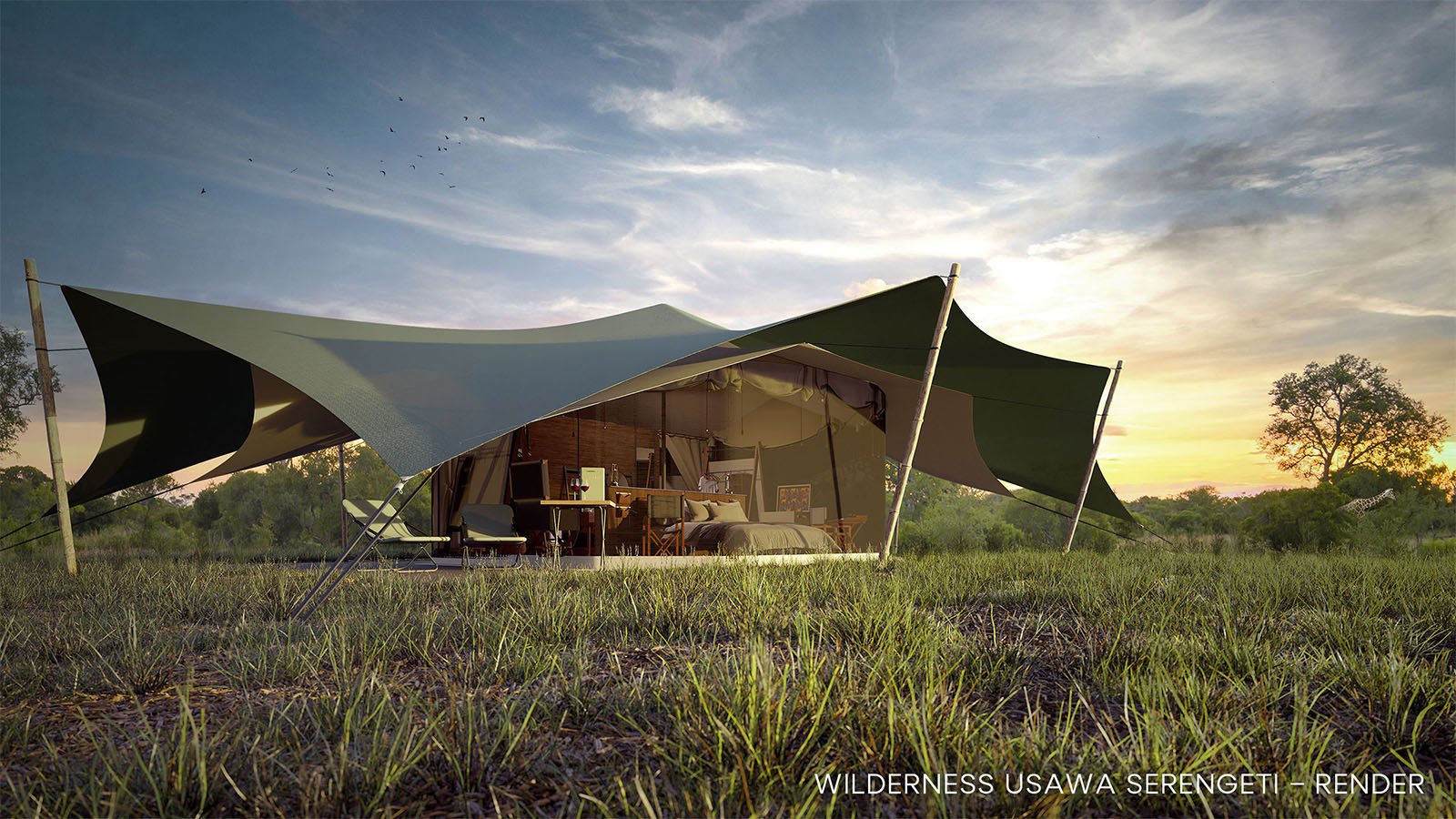
Wilderness is launching a mobile luxury tented camp, Wilderness Usawa Serengeti, in mid-July 2023. This unique operation will trail the Great Migration across Serengeti National Park, with two camps strategically placed along the migration route. This approach allows guests to witness the movement of wildlife firsthand throughout the seasons.
Hadley Allen, chief commercial officer of Wilderness, remarked on the camp’s adaptability, stating that it can quickly relocate to seasonal hotspots. This flexibility ensures that visitors are present at the most captivating moments of the migration.
The term “Usawa,” meaning balance in Swahili, reflects the essence of the migration. Grant Woodrow, who oversees Wilderness’s new business initiatives, explained that amid the frenzy of thousands of animals trying to cross rivers, a purposeful direction prevails. Life and death, drought and rain contribute to a cycle of balance restored on the plains. Wilderness Usawa Serengeti offers an intimate experience away from crowded tourist hotspots, yet remains close to the intense action of the migration.
Designed to be both mobile and luxurious, Wilderness Usawa Serengeti promises comfort without sacrificing proximity to the herds. Each camp location is deliberately chosen, keeping guests in the midst of nature’s most awe-inspiring events while avoiding areas of high tourist density.
The locations of Wilderness’s camps in the Serengeti’s designated walking zones enable guests to embark on guided walks right from their tents. Skilled guides enhance the experience with their knowledge of the park’s ecology. Additionally, game drives, birdwatching, and stargazing opportunities await from the comfort of the camp.
Wilderness Usawa Serengeti accommodates a maximum of twelve guests in six en-suite safari tents. The camp’s mobile design leaves no permanent impact on the environment, as it operates without fixed installations. Powered by solar energy, amenities include rechargeable lights, charging stations in the tents, Wi-Fi, and hot water. Children aged six and above are welcome, although those under 16 must share accommodations with an adult. Booking for sole use is required for families with children younger than six.
One of nature’s most spectacular events, the Great Migration involves approximately two million animals journeying over 620 miles annually through Serengeti National Park. Visitors can expect to see massive herds of wildebeests, zebras, Thomson’s gazelles, and elands, which in turn attract various predators.
Moreover, the Serengeti boasts over 500 bird species, making it a prime destination for birdwatchers. Unique species, such as the gray-breasted spurfowl, rufous-tailed weaver, and gray-crested helmetshrike, can be found in the area.
Beyond tourism, Wilderness engages in community initiatives aimed at educating and empowering local children. These efforts aim to mitigate reliance on poaching and deforestation, contributing to the conservation of Serengeti National Park’s extraordinary natural resources.