Pimm’s is often celebrated as a classic English beverage, and rightly so. Originating in 1912, the recipe was crafted for a chain of London oyster bars by James Pimm, catering to the tradition of pairing oysters with a refreshing cup or punch infused with gin, fruits, spices, herbs, and liqueurs, topped off with lemonade.
However, Pimm’s No.1 also enjoys a cherished status in New Orleans, particularly at the historic Napoleon House bar in the French Quarter, where their indulgent gin cups adorned with fruits have been delighting patrons for nearly a century.
Explore further: The Best Martinis in the World, According to the Experts
The Art of Crafting Pimm’s
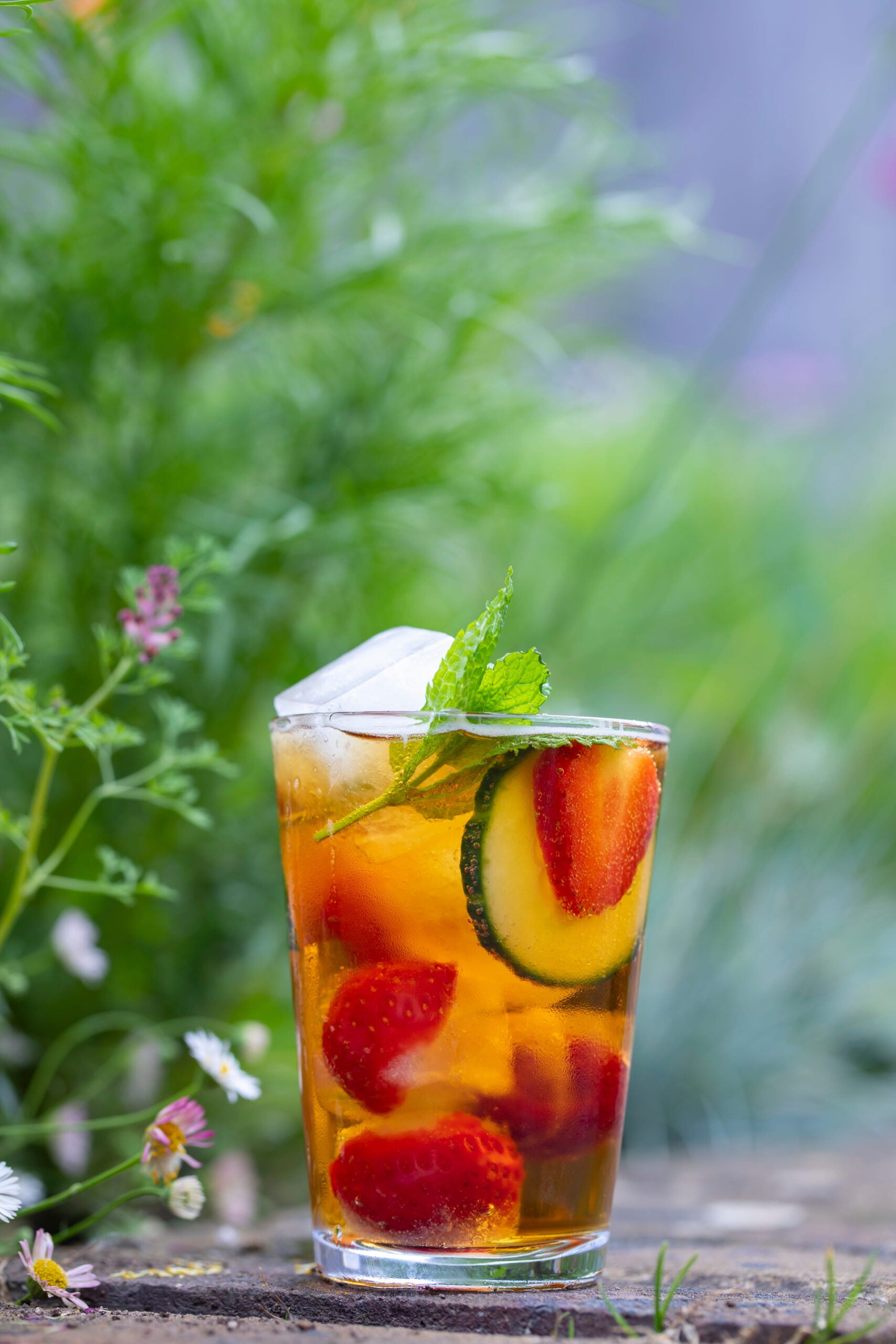
So, what makes for an exceptional Pimm’s? It’s a blend of careful preparation and quality ingredients. A well-prepared Pimm’s can be an absolute delight, whereas a poorly made one can taste overly sweet. The key is temperature; Pimm’s should always be served ice-cold. To enhance the flavors, consider letting the mixture steep with fresh fruit in the refrigerator for about half an hour. Add plenty of orange and lemon slices to balance the sweetness, along with strawberries and optional raspberries. Don’t forget a generous handful of fresh mint—give it a light smack before incorporating it to release its aromatic oils.
Traditionally, Pimm’s is topped with a sprig of borage flowers, known for their cucumber-like scent. These striking purple blooms not only elevate the cooling sensation but also add visual flair.
Charles Dickens himself praised borage, claiming it “makes a world of difference” when preparing his beloved cups during a gathering in Boston back in 1868. Borage is quite simple to grow in a pot, but if that’s not an option, cucumber slices can serve as a delightful substitute.
A standard mixer for Pimm’s is fizzy lemonade or 7-Up, but for those who prefer a less sweet alternative, consider using a lighter tonic like Fever Tree Light or simply sparkling water. The recommended ratio is about 1 part Pimm’s to 3 parts mixer.
Originally bottled at 31.5 percent ABV, the strongest available version of Pimm’s today clocks in at a milder 25 percent ABV, which might lead to a less robust flavor. To counter this, experimenting with a homemade gin cup might be the way to go—combine equal parts gin, red vermouth, and triple sec (or another orange liqueur), adjusting to your taste preferences.
Discover more: A Drinks Expert’s Take on Match-Day Pairings for the World Cup
For an exquisite gin base, consider using Hayman’s London Dry Gin, crafted by England’s oldest family-owned distillery with vibrant citrus botanicals. Alternatively, embrace the quintessential English garden vibe with Hendrick’s Gin, which harmoniously combines juniper with delicate cucumber and rose notes.
For red vermouth, I recommend the robust Martini Riserva Speciale Rubino or the barbera-based rosso from Chazalettes. When choosing an orange liqueur, Cointreau or Pierre Ferrand’s richer Dry Curacao would be excellent. Additionally, the new High Fidelity Triple Sec, co-created by Ashley Palmer Watts of London’s renowned The Devonshire, boasts a pinch of Cornish salt in its recipe, making it irresistibly moreish.
Finally, remember that Pimm’s is best enjoyed in a communal setting—always mix it by the jug, as one glass simply isn’t sufficient.
Alice’s DIY Pimm’s Recipe
Ingredients
- 300ml gin
- 300ml red vermouth
- 300ml triple sec or other orange liqueur
- 900ml well-chilled, fizzy lemonade, tonic, or soda water
- Garnish: orange and lemon slices, sliced strawberries, mint sprigs, and borage flowers
Method
In a jug, combine the first three ingredients along with all garnishes except the borage, and chill in the refrigerator for half an hour. Just before serving, add ice along with extra mint sprigs and borage flowers.