The upcoming auction at Sotheby’s features ‘Gus,’ an extraordinary Tyrannosaurus rex fossil estimated to sell for between $20 million and $30 million. This impressive specimen dates back 67 million years.
As one of history’s most formidable predators, the Tyrannosaurus rex has captivated public interest for generations. It thrived in western North America during the Late Cretaceous period, sporting a massive skull and a powerful bite, complemented by a keen sense of smell. Even millions of years after their extinction, T. rex continues to influence popular culture, appearing in films, television shows, and exhibitions globally.
‘Gus’ is not just another T. rex; it is one of the most substantial and well-preserved specimens discovered to date. Comprising 183 bone elements, it is around 63 percent complete, with its impressive skull measuring 53 inches and retaining approximately 82 percent of its original structure. The recovery process also unearthed well-preserved feet, a reconstructed pelvis, and the rare wishbone. This fossil stands about 12.5 feet tall and features a femur that exceeds 50 inches, providing a remarkable window into the life of one of prehistory’s apex predators.
Cassandra Hatton, Sotheby’s Vice Chairman and Head of Science and Natural History, remarked, “Gus is the result of years of careful excavation and preparation under challenging conditions, followed by extensive research and documentation. Tyrannosaurus rex is the most iconic prehistoric species, and ‘Gus’ represents one of the finest examples ever discovered.”
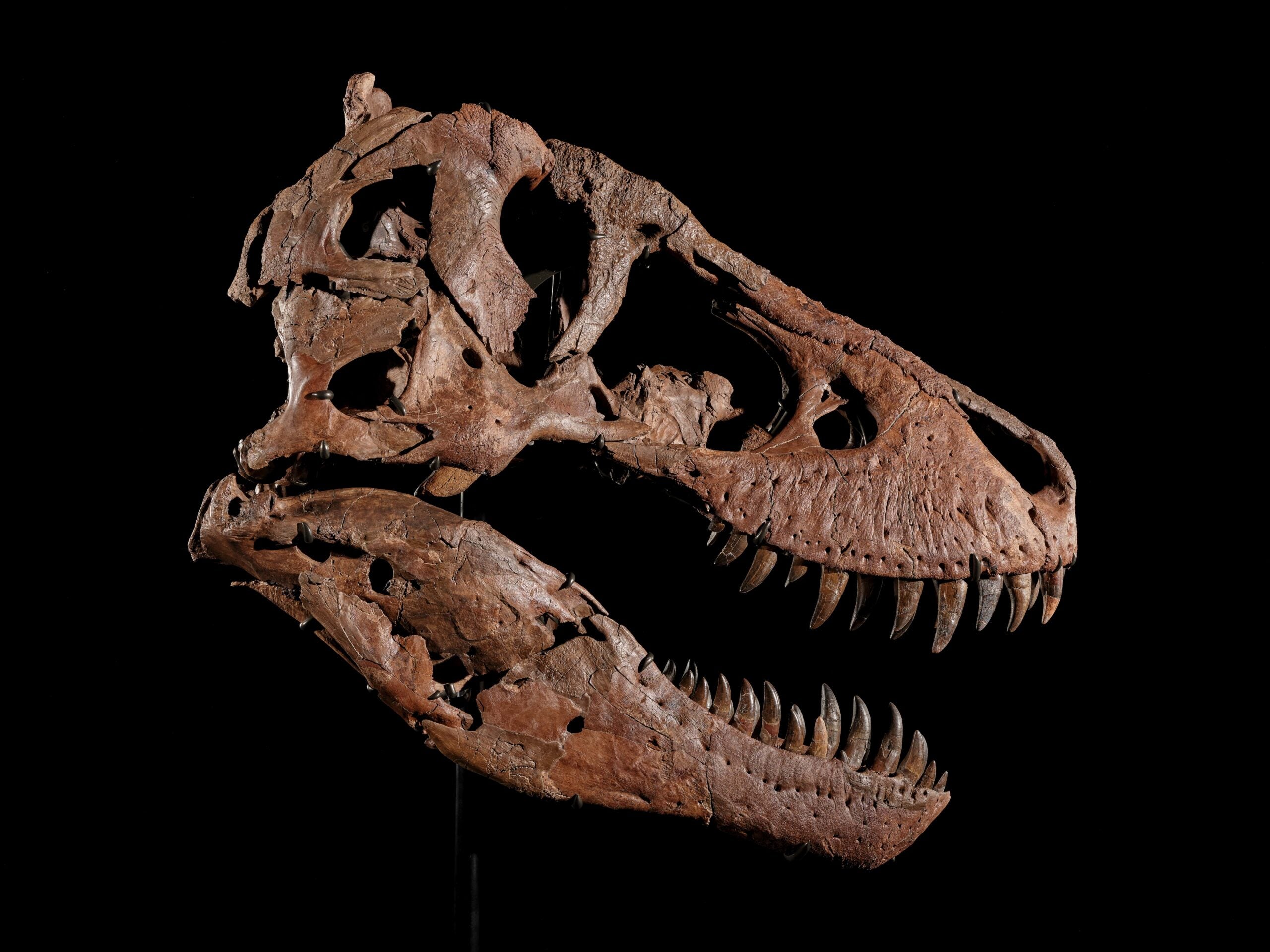
The tale of ‘Gus’ is as remarkable as the fossil itself. In 2021, paleontologists from Theropoda Expeditions commenced their excavation in Harding County, South Dakota, on land owned by rancher Gary ‘Gus’ Licking. Having unearthed smaller bones and fossilized teeth over the years, Licking perceived that a larger specimen might be hidden beneath the surface. His intuition proved correct when the excavation team discovered the T. rex precisely where he had suggested they start digging.
The retrieval process was meticulous and extended over several years, with three dedicated to excavation followed by an additional three to prepare and extract the bones.
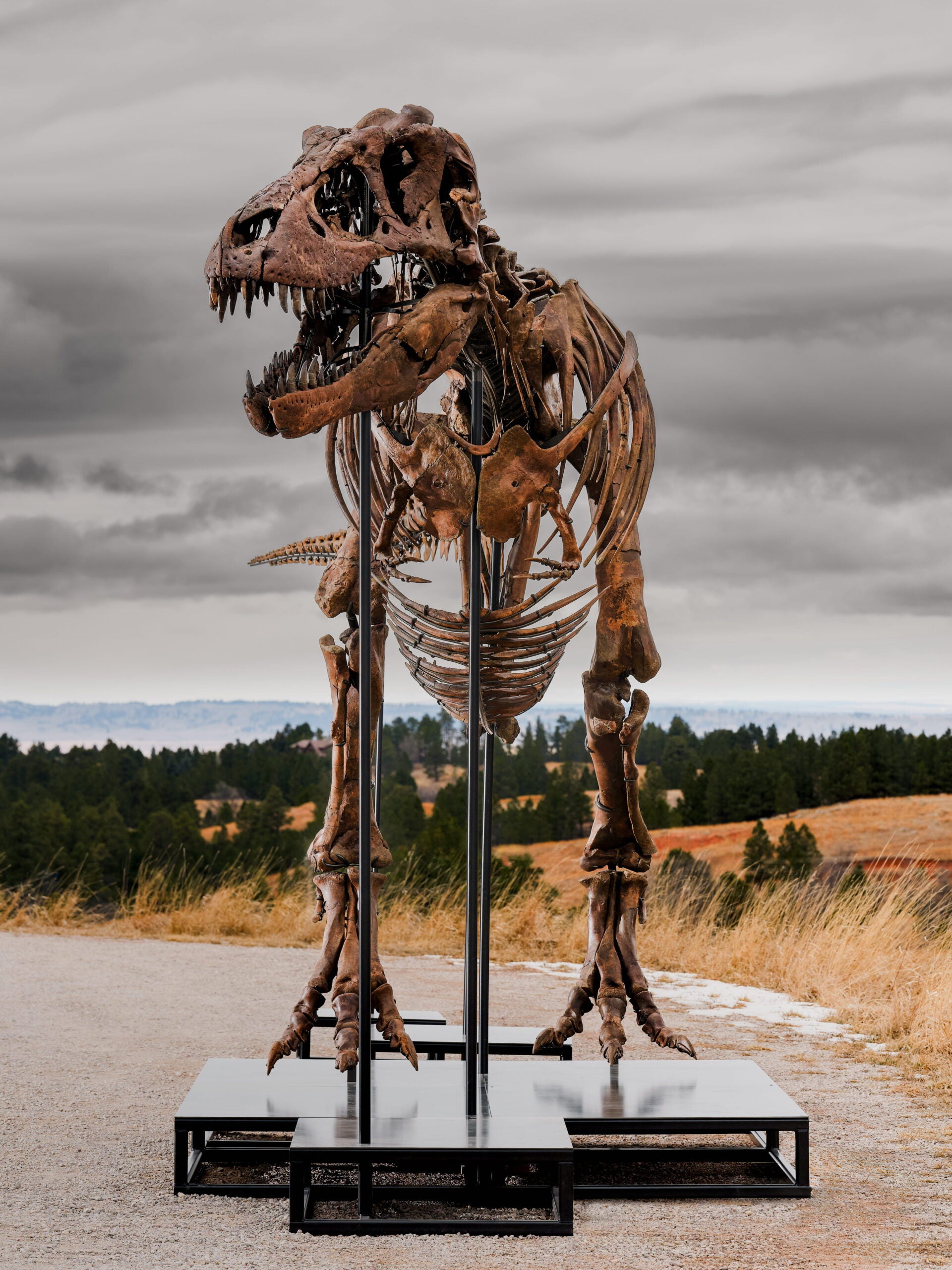
Thomas Heitkamp, the president of Theropoda Expeditions and the discoverer of ‘Gus,’ explained, “Recovering this specimen took three years, and the team sometimes worked for weeks without finding anything. The site functioned as a complex fossil bed, preserving a variety of fossils from the larger Cretaceous ecosystem. Each step of our work was documented with maps and inventories, which ultimately led to the discovery of an astounding T. rex specimen.”
The reconstruction phase was both challenging and rewarding for Heitkamp. He stated, “It feels like solving an exceptionally difficult puzzle, but first, we must find all the pieces. The fact that we can reconnect bones that have been separated for 67 million years is deeply fulfilling.”
Related Story

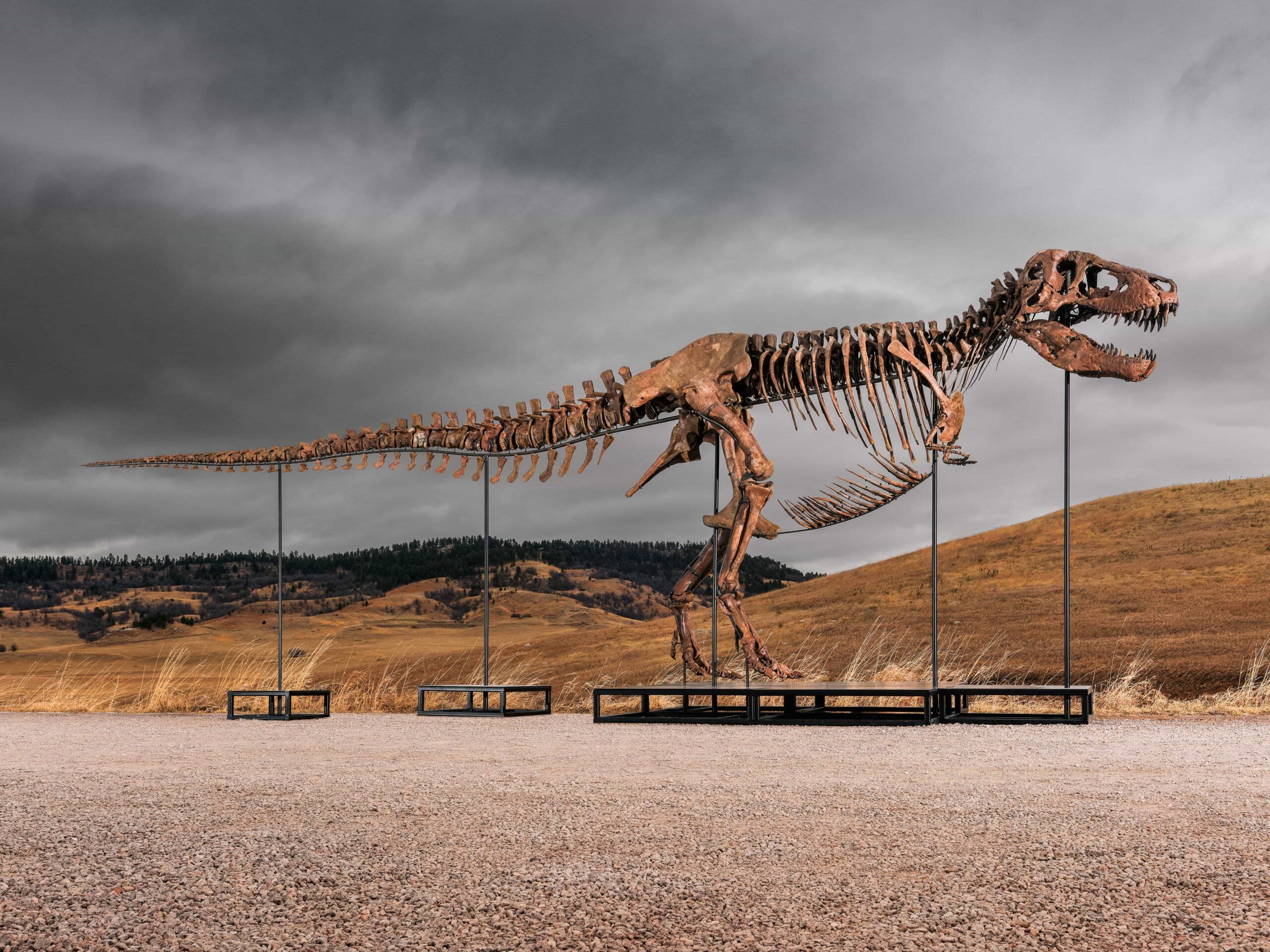
For Dana Licking, the widow of Gary Licking, observing the trajectory of ‘Gus’ from its discovery to its exhibition has been profoundly significant. She stated, “Following the journey of a discovery as important as ‘Gus’ has been an incredible experience. Witnessing the hard work and dedication of the team in preserving every detail has been enlightening. Few understand the effort required to present a specimen of this scale to the public.”
Sotheby’s has a notable history with dinosaur auctions. In 1997, it sold ‘Sue,’ the first T. rex to be auctioned. Recently, the stegosaurus known as ‘Apex’ set records by selling for $45 million in 2024. With expectations around $30 million, ‘Gus’ is set to carry forward this legacy at Sotheby’s Natural History Auction on July 14 in New York. The fossil will be displayed at Sotheby’s Breuer gallery starting July 1.