Maria Grazia Chiuri’s first cruise collection for Fendi signals a pivotal moment in her career, stepping out from her previous role as Dior’s first female creative director. After nearly a year with Dior, she has embraced her new position as Fendi’s chief creative officer, a role that marks her debut engagement with menswear while maintaining her focus on womenswear.
While discussing her gender may seem misplaced, it is hard to overlook Chiuri’s influence as a prominent feminist designer, especially given her track record of nearly quadrupling Dior’s sales during her tenure. These aspects undeniably influence the interpretation of her latest collection.
Chiuri’s initial collection at Dior featured the now-iconic “We Should All Be Feminists” T-shirt, a bold statement designed to resonate during the social media boom. In contrast, her debut Resort 2027 collection for Fendi navigates discussions around gender with a subtler, more thoughtful touch than her previous overt expressions at Dior.
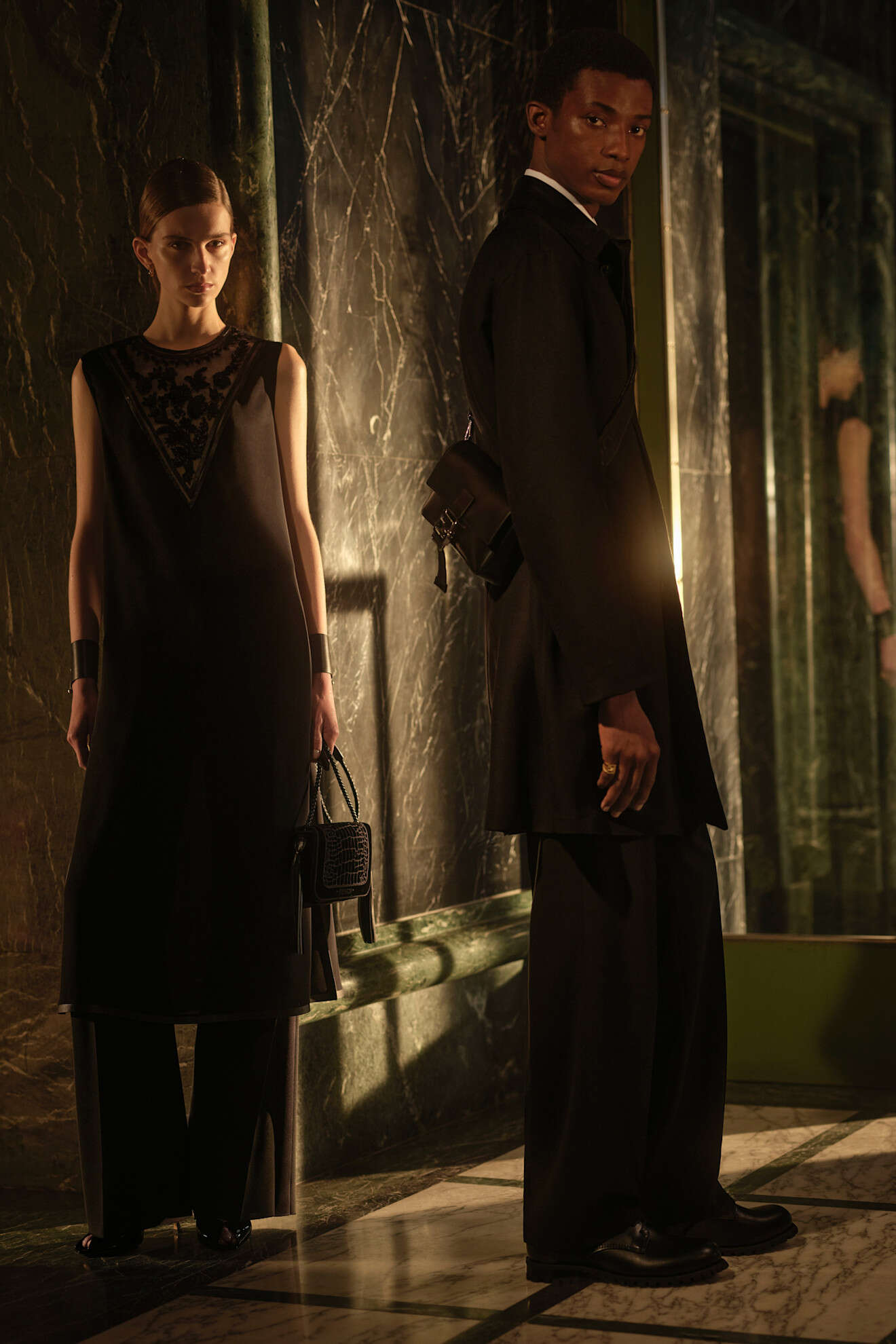
In the Pre-Season 2027 collection, Chiuri showcases male and female models paired together in variations of identical outfits. These designs, while not strictly gender-neutral, lean towards gender-fluid aesthetics, inviting both men and women to interchangeably wear pieces characterized by softened tailoring and adaptable silhouettes.
As highlighted in a recent film shared on Fendi’s social media channels, Chiuri draws inspiration from the brand’s historical use of parchment. This influence manifests in accessories like a revamped Baguette bag, along with a color palette featuring muted tones such as creams, tobacco, stone, and faded beige. The collection suggests a refined yet modern bourgeois wardrobe, defined not simply by the trending concept of “quiet luxury,” but by clothing that reflects familiarity and daily rituals.
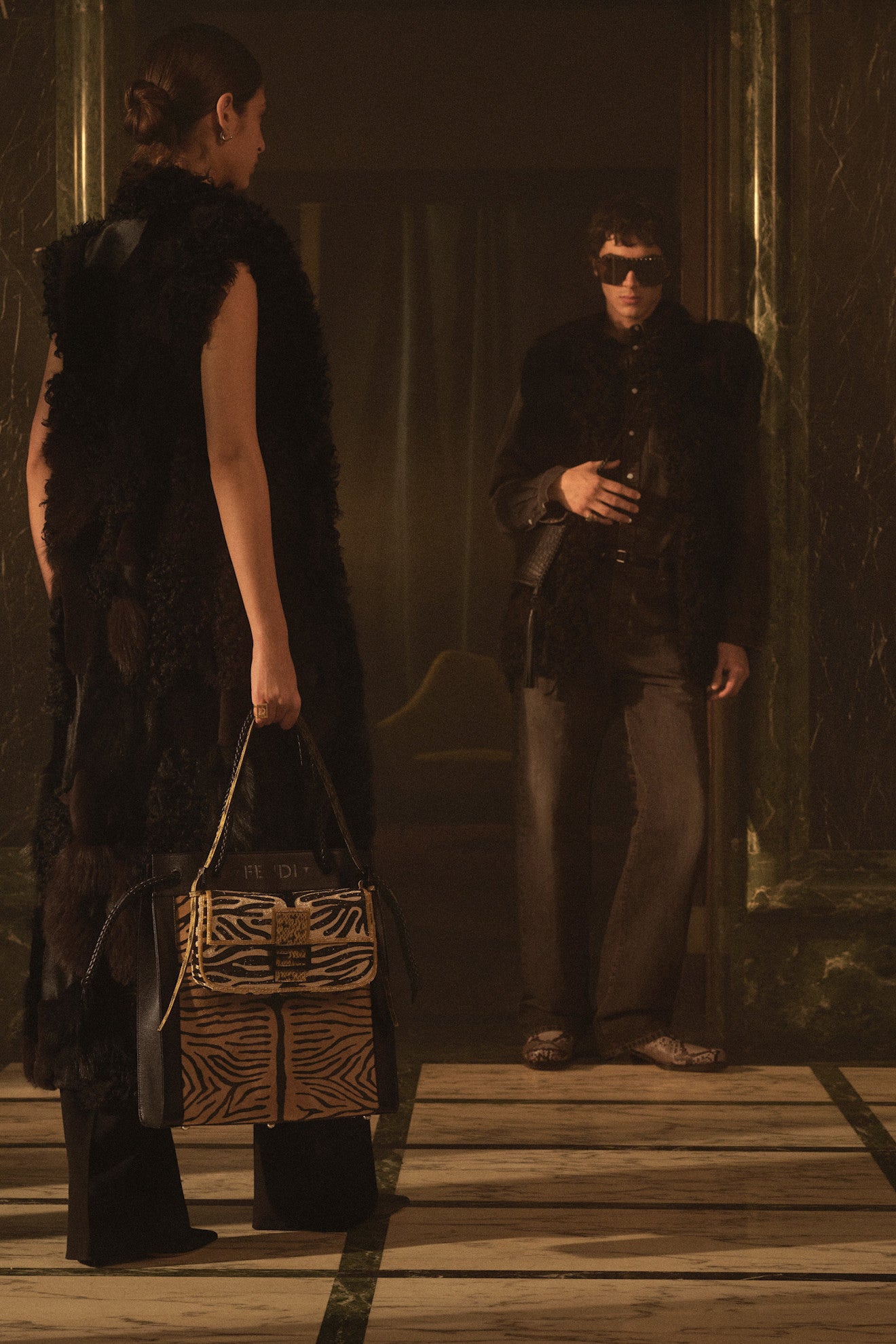
Throughout the collection, men and women sport similar styles, ranging from silver-washed denim to oversized trench coats and soft leather jackets. Chiuri opts for a practical approach, creating a unisex wardrobe that emphasizes durability and character development through wear.
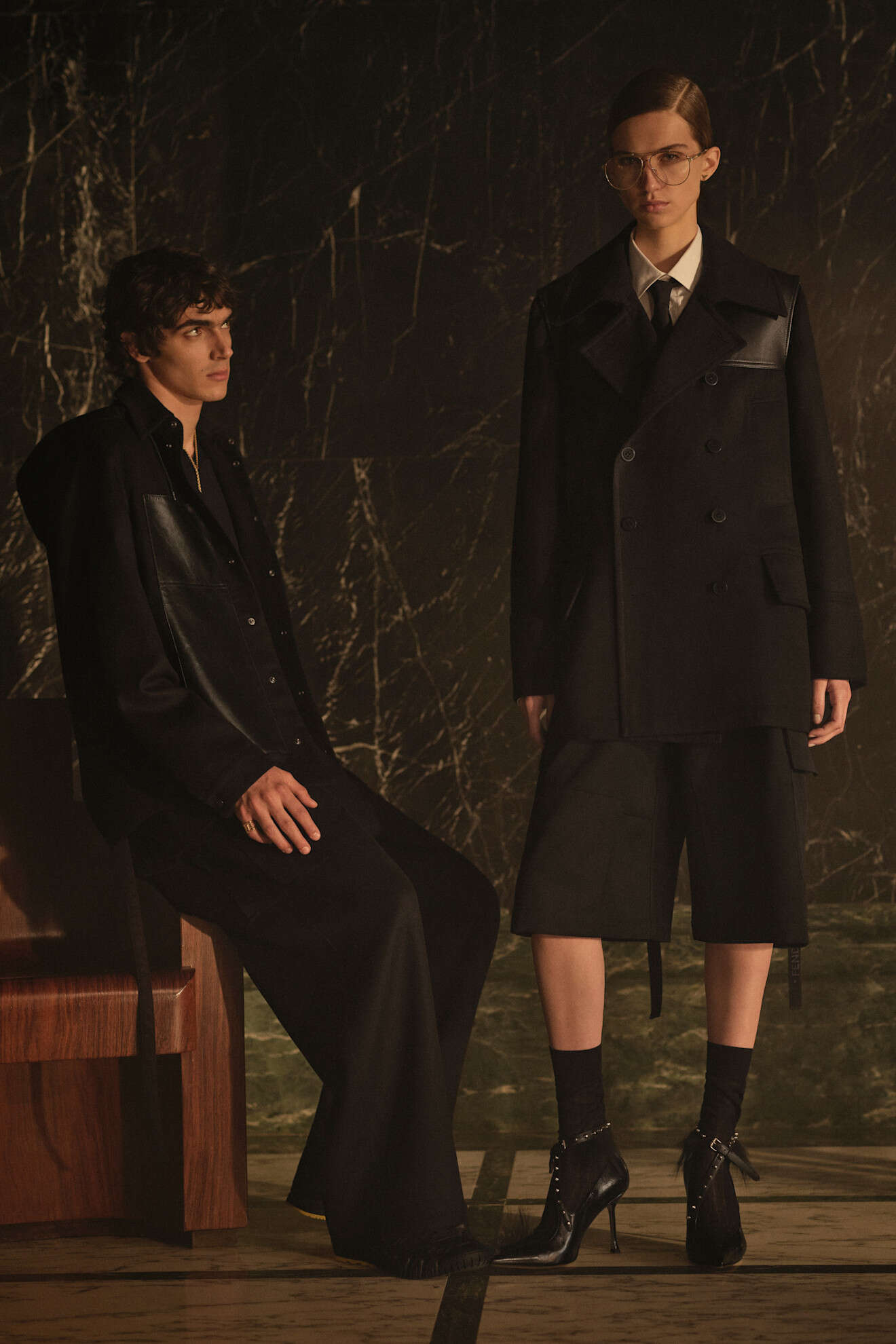
Chiuri has asserted from the start that her vision for Fendi focuses on practicality and the daily intricacies of a shared wardrobe. She has openly discussed borrowing pieces from her husband’s closet, reflecting a familiar dynamic that influences her designs. This debut does not seek to revolutionize Fendi but rather to affirm its essence while unveiling a fresh perspective that favors subtlety over overt statements.