While elite golf clubs often captivate the imagination, few truly exemplify the term “exclusive.” Augusta National stands as a prime example, with its limited membership of around 300 individuals, while clubs like Cypress Point, Burning Tree, and Pine Valley Golf Club further solidify that scarcity. In the UK, JCB Golf and Country Club operates under similar invite-only rules, shutting out pay-and-play enthusiasts.
Castiglion del Bosco, nestled in Tuscany, was one of Italy’s few clubs adhering to this exclusive model until recently. Designed by the renowned course architect Tom Weiskopf, the course opened in 2011 within the UNESCO-recognized Val d’Orcia and had remained accessible only to its members.
The renowned exclusivity provided the club with a prestigious aura; however, the decision to mirror Augusta’s membership structure seemed illogical. Golf holds a lesser status in Italy compared to other pastimes such as water polo. Moreover, the golf course exists alongside a luxurious hotel and a vineyard that produces celebrated Brunello di Montalcino wines.
Despite the natural synergy of a stay-and-play arrangement for hotel guests, the club did not initially pursue that option. Consequently, membership numbers lagged, leaving the course often unplayed.
A significant shift occurred in 2022 when Massimo and Chiara Ferragamo, guardians of the Ferragamo luxury brand, sold the property for an estimated €400 million to an undisclosed buyer. Following consultations, the new proprietor opted to permit hotel guests access to the course, enhancing the membership appeal while maintaining a cap at 300 to preserve the intimate golfing experience.
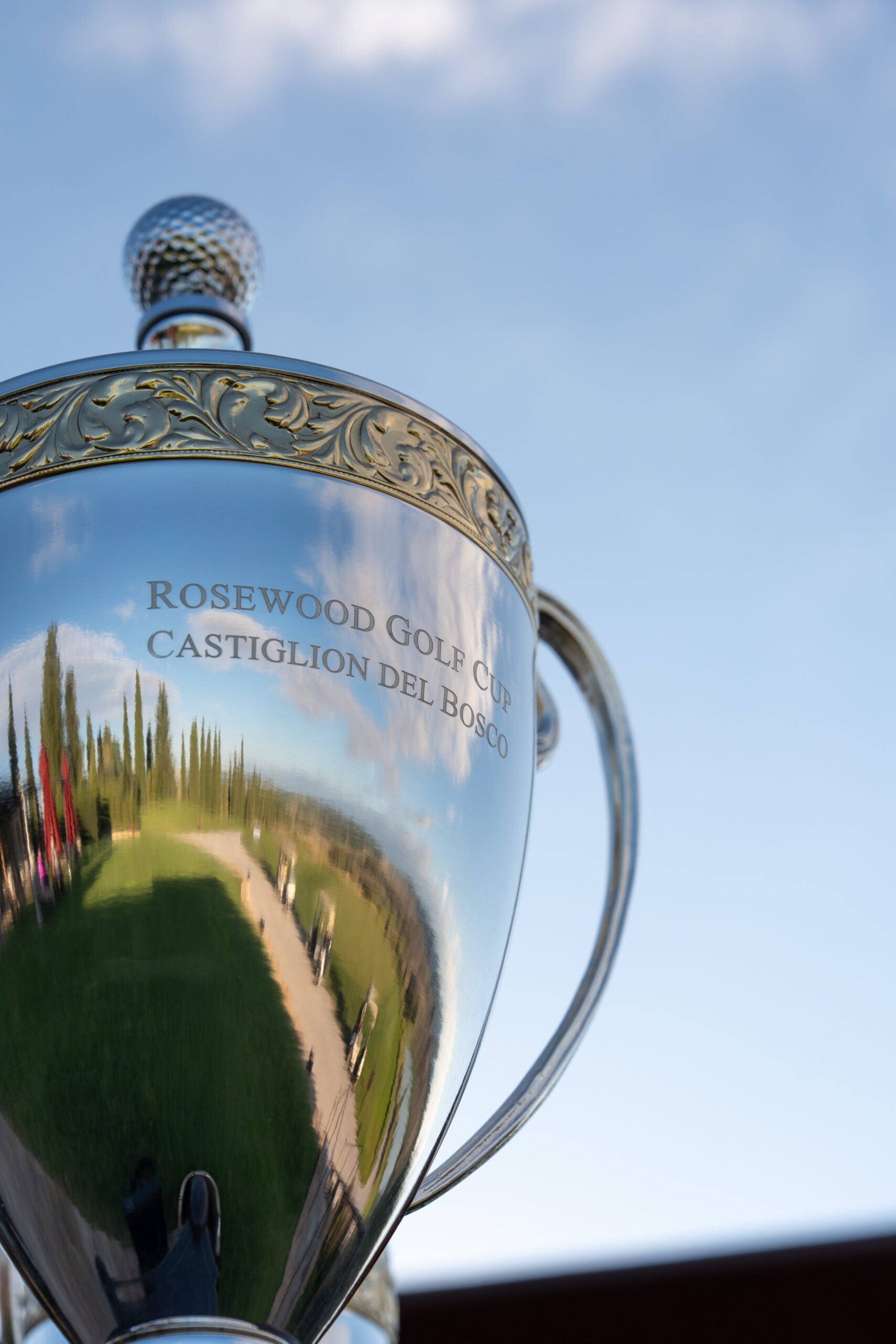
A new biannual event, the Rosewood CdB Golf Cup, was introduced as part of this refreshed approach, catering to existing and prospective members as well as hotel visitors.
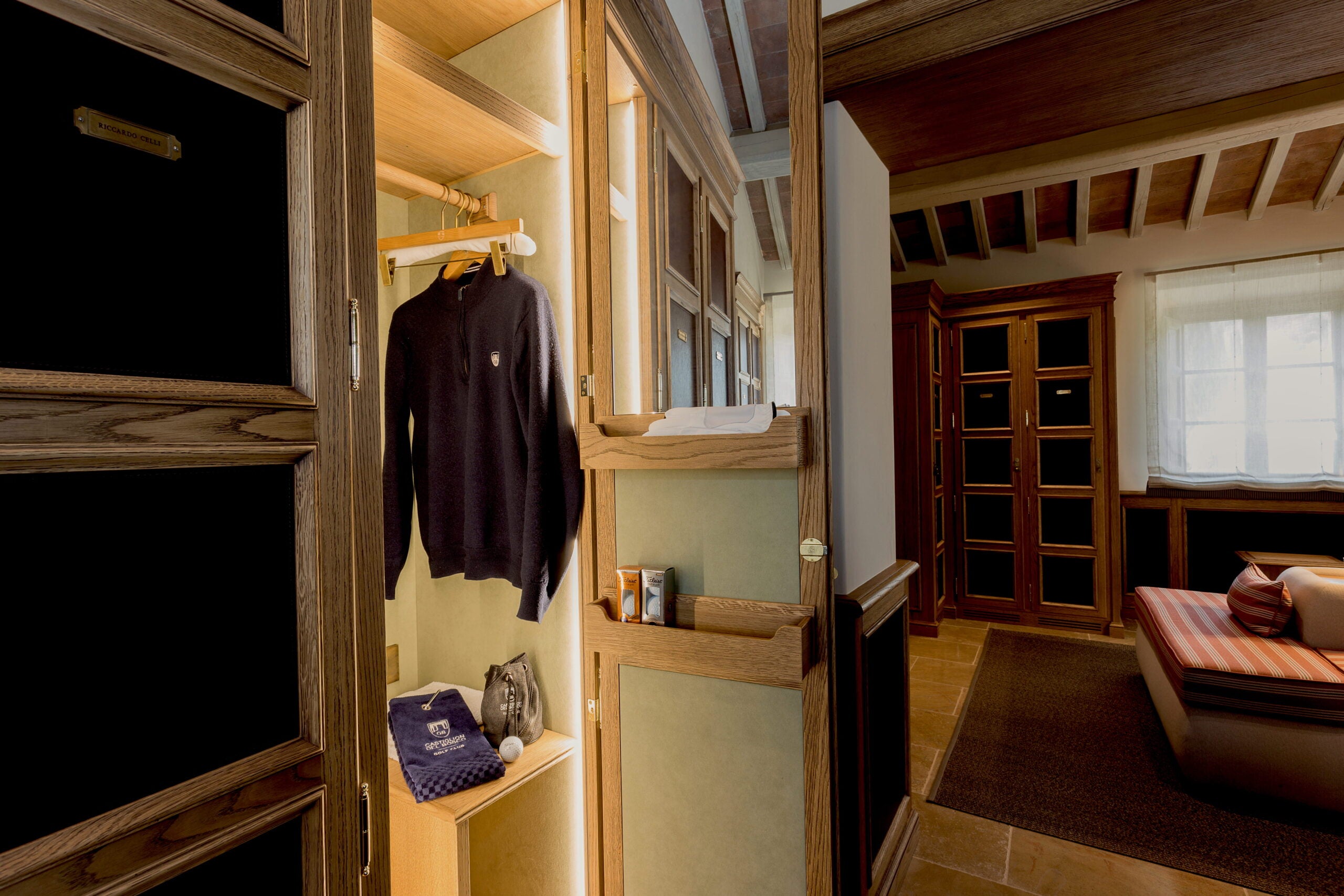
The Club’s private clubhouse lockers ©Castiglion del Bosco
As the tournament approaches, a drive from Florence through Siena offers little insight into the hidden “castle in the woods.” The surrounding forest conceals the hilltop hamlet until visitors traverse the typical Tuscan strada biancha leading onto the estate, unveiling the course for the first time.
The influence of Weiskopf is immediately evident. Known for his ability to integrate a course within its natural landscape, he created a layout that flows around a creek, incorporating the land’s elevation changes to enhance the challenge.
One of UNESCO’s stipulations for course construction required minimal land disruption, a directive Weiskopf honored by selecting bunker sand that mimics the local chalky roads.
Castiglion del Bosco Golf Experience
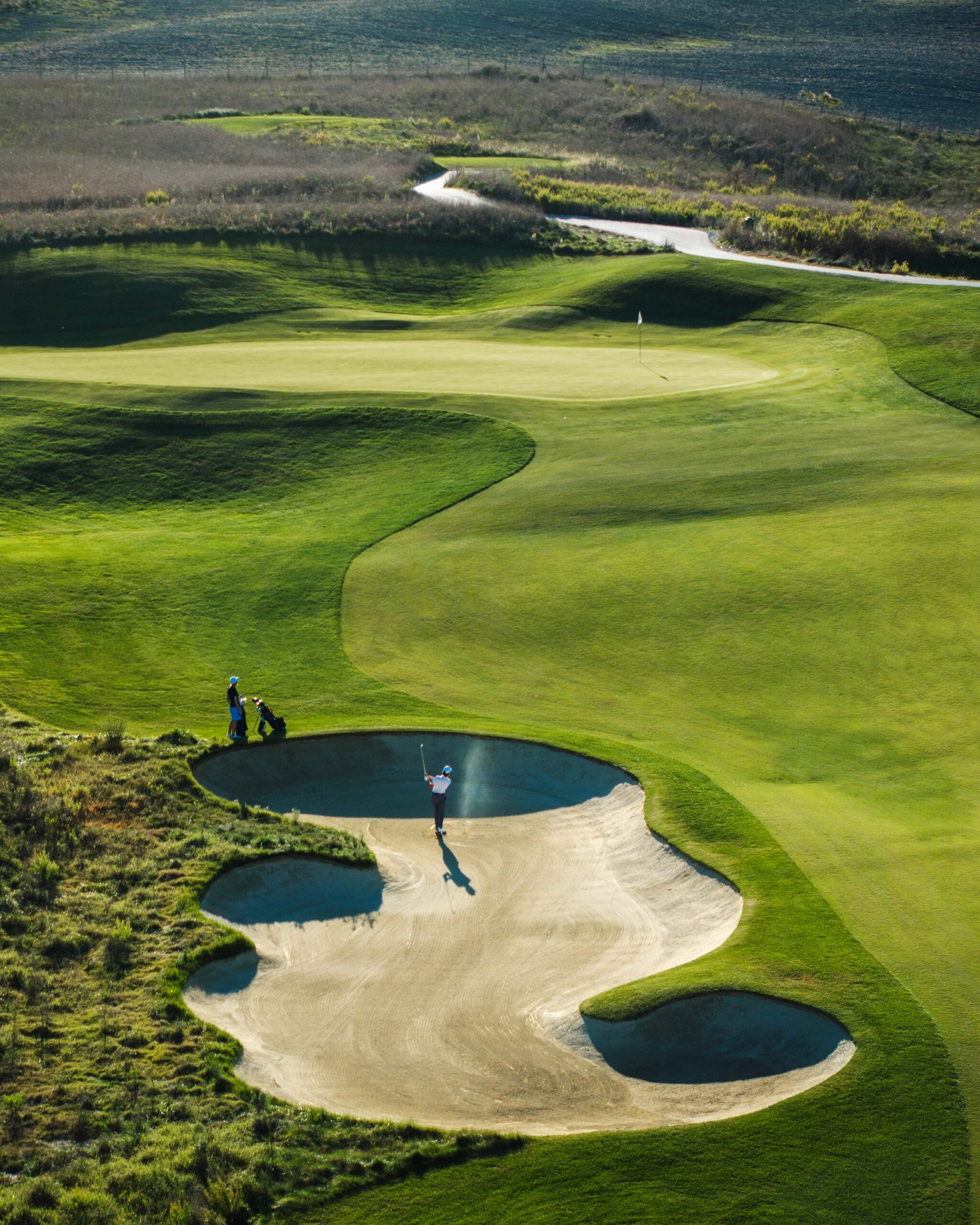
As golf begins on a crisp spring morning, the first hole reveals the charm of the course, with dew-kissed fairways and captivating valley views from nearly every hole, some framed by the secluded villas operated by the hotel.
This time of year, the course is at its most forgiving, with shorter roughs and accommodating rolling fairways. However, the greens maintain their renowned speed, providing a challenge for even the most skilled players. Lunch is served after nine holes, complemented by a glass of Brunello, if the play warrants it.
Although the club’s exclusivity may have decreased, the new operational model appears effective. Membership has grown to nearly 200, with approximately six percent of hotel guests opting to play the course, resulting in an estimated 5,000 rounds annually. This figure is both profitable and low enough to ensure that golfers often have the course largely to themselves.
Interestingly, one member of the playing group opted to join, with individual membership fees set at €70,000 and annual dues of €6,000. Family memberships exceed that, bringing in members largely from the East Coast of the United States, with a notably small number of Italians amidst them.
The next Rosewood CdB Golf Cup is scheduled for 5-8 November 2026. For more details on membership, golf packages, or hotel stays, please visit rosewoodhotels.com/en/castiglion-del-bosco or reach out via email at cdelbosco@rosewoodhotels.com.