In a world captivated by nostalgia—where fashion resurrects classic silhouettes and music revives bygone eras—Flavio Manzoni, Ferrari’s Chief Design Officer, challenges the status quo, embracing a dynamic interplay between heritage and innovation.
For Manzoni, true progress arises not from rehashing the past but from engaging in a meaningful dialogue with it. “We owe it to ourselves to remember our heritage, yet we must not be bound by it,” he states, highlighting a philosophy that has driven Ferrari’s design direction under his leadership for over a decade.
“Consumers expect modern interpretations of historical designs. However, for me, genuine design is synonymous with innovation, not the mere replication of what has previously existed,” he asserts.
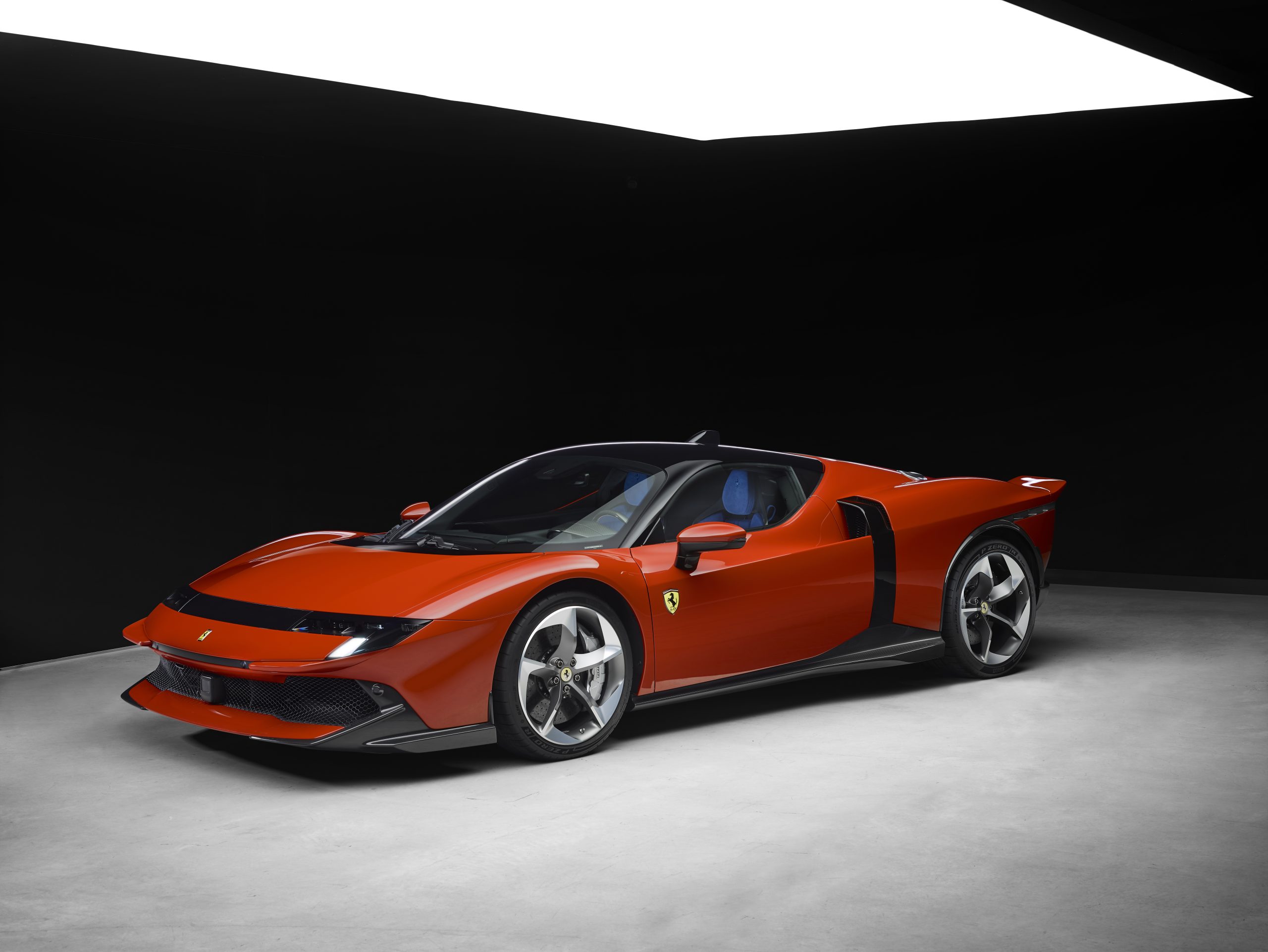
This philosophy underpins Ferrari’s latest supercar, the F80 Testarossa, an impressive successor to the SF90 Stradale that embodies the bold vision Manzoni champions. It represents not a token tribute to the past but a transformative leap toward Ferrari’s future.
When embarking on the F80 Testarossa, Manzoni’s goal was not refinement but transcendence. “Our ambition was to radically shift the design,” he remarks. “While the SF90 Stradale retained traditional berlinetta influences, our aim was definitive: this is a supercar.”
For Ferrari, innovation begins with an expansive exploration process. Manzoni leads a dynamic styling team of 100 to 120 members, driven not just by design but by a passionate commitment to realising cutting-edge visions.
“Our journey starts with broad experimentation,” he elaborates. “We don’t confine ourselves to preconceived notions. Understanding project constraints is vital to developing the optimal vehicle.”
This creative divergence encompasses both traditional sketches and what Manzoni terms “3D sketches,” which are rapid digital prototypes that assess the feasibility of concepts.
“Even a brilliant idea requires validation against the project’s constraints,” he stresses. “Only after rigorous testing do we refine concepts to achieve a stunning visual outcome.”
The Genesis of the Twin Tail
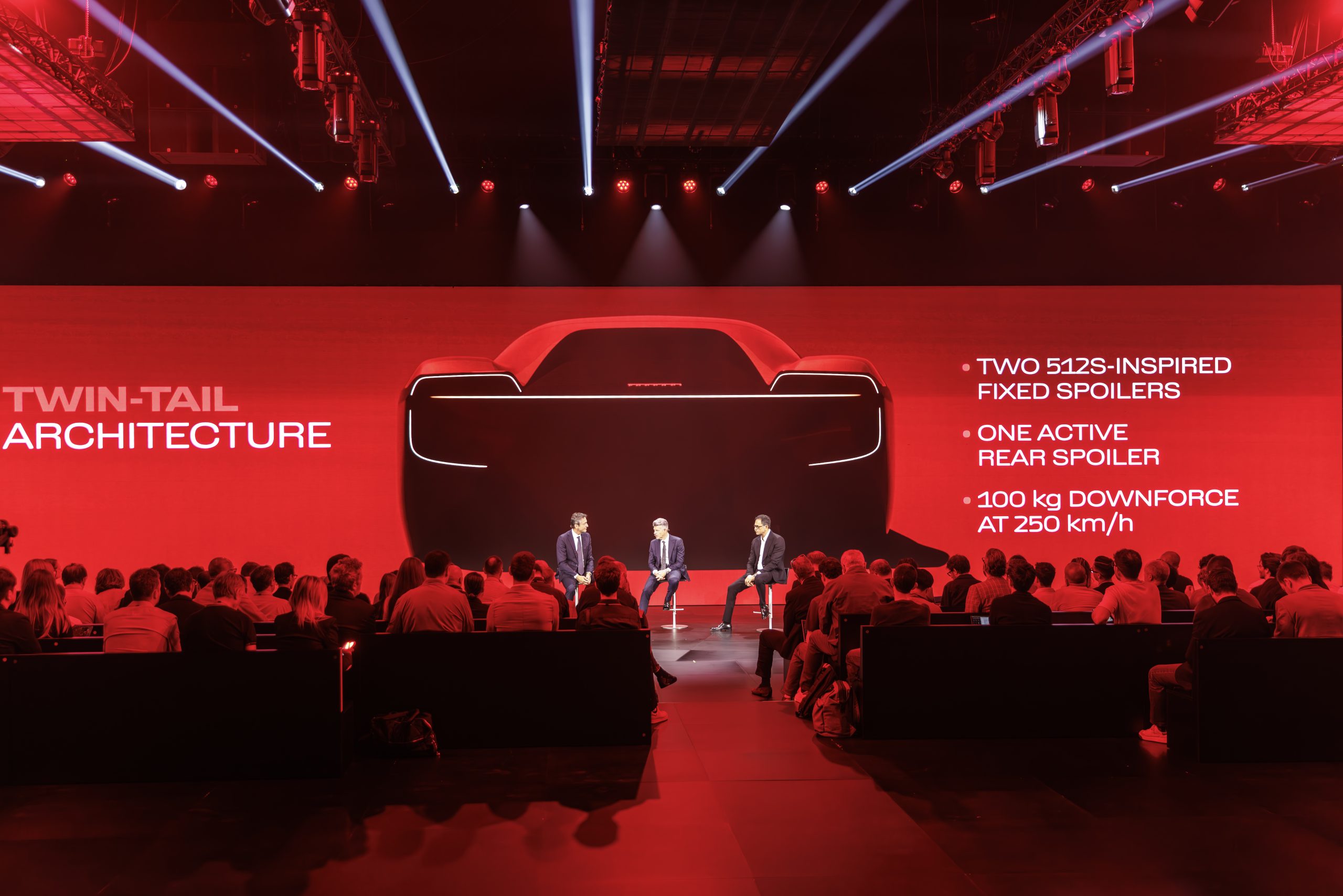
Some of Ferrari’s most iconic features arise not from certainty but through embracing risk. The F80’s striking twin tail exemplifies this ethos.
“The twin tail, or codoni in Italian, posed significant challenges,” Manzoni confides. “Until the final stages, we were uncertain of its viability. It felt like a gamble, yet the concept resonated strongly. I was eager to see it realized.”
Amidst skepticism from engineers and mounting constraints, some concepts test one’s resolve. But Manzoni recognized this was a vision worth championing.
“When faced with overwhelming doubts or obstacles, I often consider alternatives,” he admits. “Yet I can sense when something can come to fruition, and I’m determined to pursue it.”
The outcome? A sculptural, aerodynamic hallmark that establishes the vehicle as one of the most visually stunning modern supercars ever conceived by Ferrari.
Understanding Manzoni involves appreciating his holistic approach to design—an immersive practice that goes beyond the superficial.
“I’m not solely focused on aesthetic appeal,” he articulates. “Design transcends styling; it’s an integrated endeavor that combines form and content.”
This philosophy imbues cars like the F80 with personal significance as Manzoni navigates each hurdle, intertwining performance with aerodynamic elegance while discerning which concepts to retain or discard.
“Each opportunity to create something truly innovative fills me with pride,” he reflects.
Manzoni’s outlook resonates amidst a culture often tethered to nostalgia—emotionally, artistically, and culturally.
“Upon launching my career in 1993, I noticed the world shifting towards retro styles,” he recalls. “The obsession with vintage aesthetics permeated everything—music, fashion, design. This trend persists.”
His inspiration has never been about looking back. Instead, it resides firmly in futurism and the infinite possibilities that lie ahead. From childhood dreams to now manifesting them, he continues to advance with an unwavering vision.
In conversations about futurism, he mentions Syd Mead, the iconic industrial designer known for shaping cinematic landscapes and automotive aesthetics. Mead’s work on films like Blade Runner exemplifies his talent for envisioning both fantastical and plausible futures.
“He remained a master, a visionary in design,” Manzoni acknowledges.
However, when probed about Mead’s influence on the new Ferrari, he simply shakes his head. “Not particularly. My drive was the allure of innovation and futurism itself.”
The 849 Testarossa signals not just a singular achievement but heralds a refreshing aesthetic vocabulary for Ferrari.
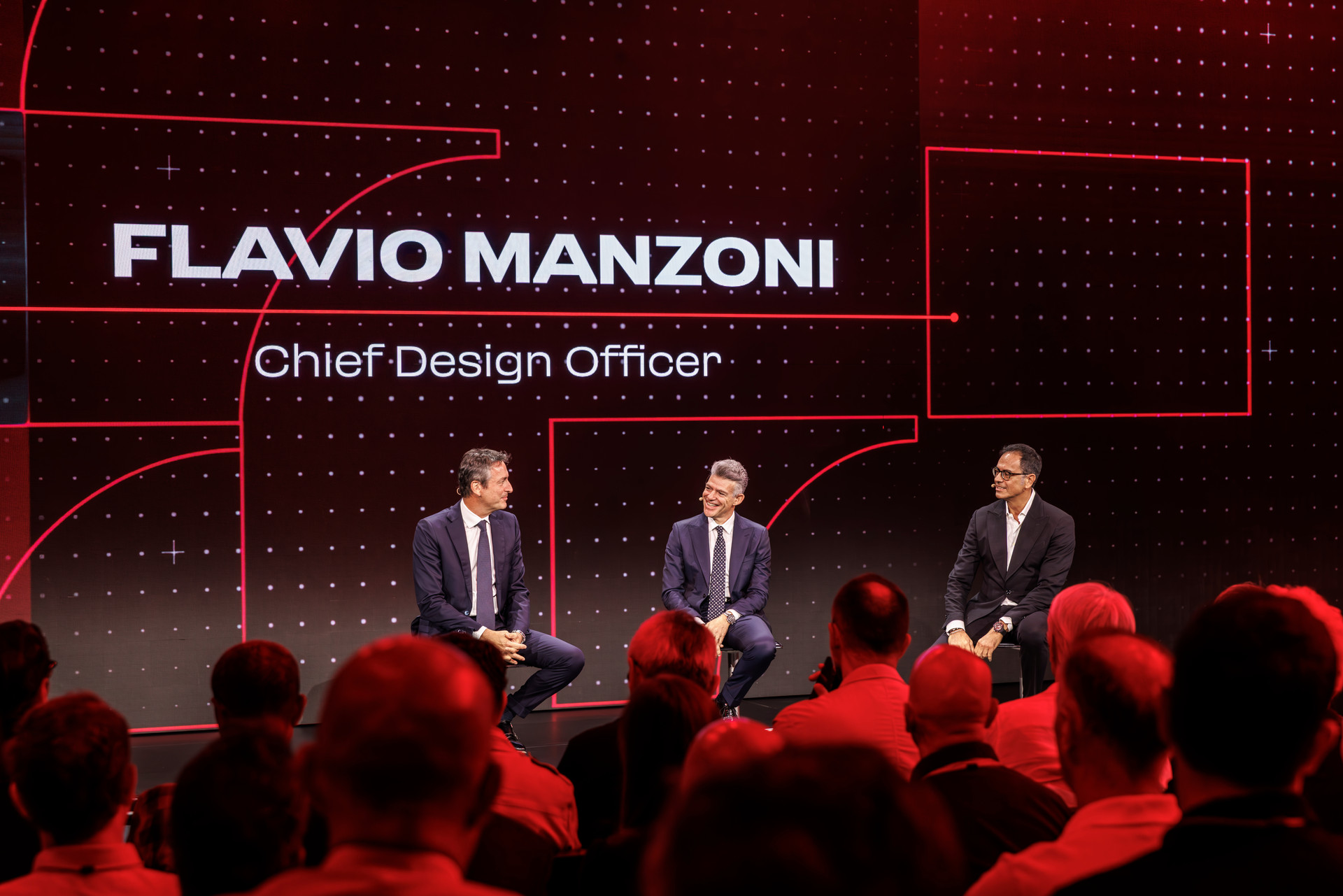
“Future models will share this design language, each offering distinct interpretations. Much like music,” Manzoni explains, likening design to melody. “With just seven notes, one can create limitless compositions.”
He elaborates that each Ferrari category—be it GTs, supercars, or hypercars—will express these design “ingredients” in unique ways.
“A GT should exude elegance, while a performance-oriented car must possess a more aggressive aesthetic,” he articulates. “It’s all about how these elements are expressed.”
This design philosophy began with the 12Cilindri, evolved with the F80 hypercar, and has now reached its boldest manifestation in the 849 Testarossa, emblematic of Manzoni’s signature Italian flair.
As the conversation draws to a close, it’s apparent that Flavio Manzoni is crafting not merely vehicles for today but the visual foundation for Ferrari’s trajectory over the coming decade and beyond. To him, the past merely informs the present, while the future beckons irresistibly.
Through the creation of the 849 Testarossa, Manzoni vividly demonstrates a profound truth: Ferrari’s most legendary icons stem not from nostalgia, but from the audacity to envision what has yet to be realized.