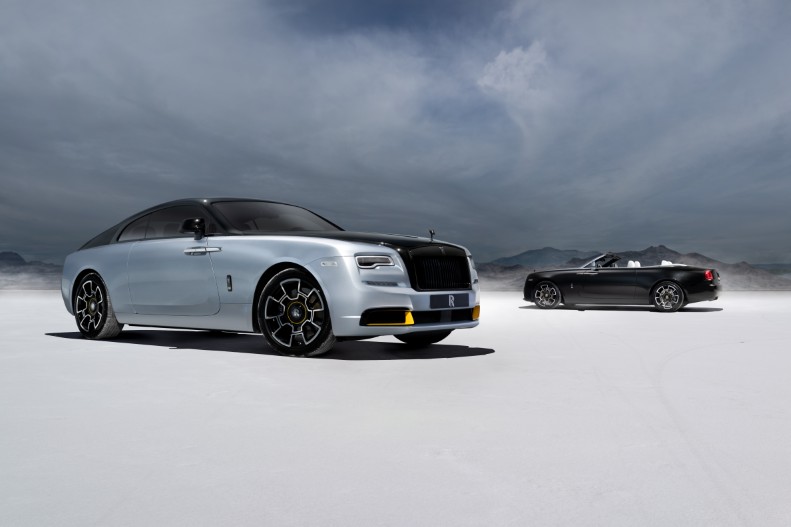
Photo Credit: Rolls-Royce
The union of power, rebellion, and reinvention is rare in the automotive world, yet Rolls-Royce Motor Cars has expertly woven these elements into its narrative over the past decade. As the Black Badge line reaches its ten-year milestone, it signifies more than just a design variation; it serves as a profound alter ego that has reshaped the standards of modern super luxury.
The Birth of Black Badge
Launched in 2016, Black Badge transcended a mere aesthetic choice. It created a unique contrast within Rolls-Royce, catering to a new class of business magnates, cultural innovators, and tech-savvy entrepreneurs who express their success with vigor. This clientele respected the brand’s iconic serenity and V12 prowess, yet desired a sharper, more dynamic interpretation. Black Badge was their answer—merging boldness with the unwavering craftsmanship that Rolls-Royce is renowned for.
This instinctive rebelliousness roots back to the brand’s inception.
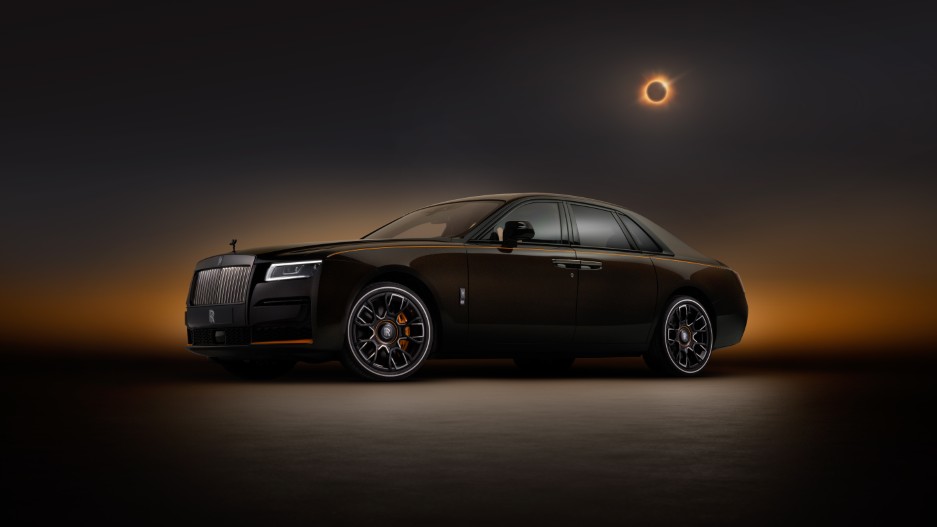 Photo Credit: Rolls-Royce
A Legacy of Innovation
Sir Henry Royce, despite facing challenges early in life, engineered vehicles of such precision that they earned accolades as the greatest in the world. In contrast, Charles Stewart Rolls embraced the thrill of the unknown, choosing a path marked by audacious pursuits in early racing and aviation. Their shared ambition instilled a creative defiance within Rolls-Royce’s DNA.
Historical insights reveal that the essence of Black Badge was sown long before its official introduction. In 1928, a distinctive 20 H.P. Brewster Brougham was delivered with its Spirit of Ecstasy and radiator grille finished in black—a bold move at a time when shiny metals signified status. Commissioned by financier J. E. Aldred for use in New York, this vehicle foreshadowed the design ethos that Black Badge would ultimately embody.
Another significant landmark occurred in 1964 when John Lennon customized his Rolls-Royce Phantom V in a deep gloss black, extending this aesthetic to components generally rendered in bright metals. Crafted by Mulliner Park Ward, this car exuded a mysterious allure, reflecting Lennon’s cultural significance. This iconic vehicle is often viewed as a precursor to Black Badge, representing unapologetic uniqueness well before the term gained traction within the brand.
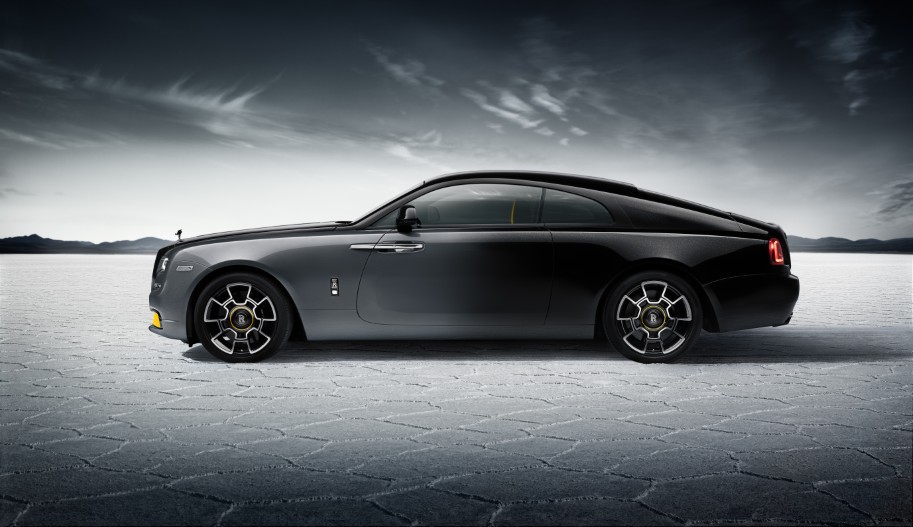 Photo Credit: Rolls-Royce
Responding to Modern Luxury
By the early 2010s, a fresh wave of entrepreneurs approached Rolls-Royce with aspirations shaped by a fast-paced digital landscape. While they held heritage in high regard, they rejected the notion that subtlety was mandatory. They yearned for craftsmanship blended with audacity, where precision met excitement. Developing a response required intricate discussions within the company to ensure that this bold expression harmonized with the established identity rather than detracting from it.
Thus emerged the formidable Black Badge alter ego. Designers adorned the Spirit of Ecstasy, Pantheon grille, and double R Badge of Honor in black chrome, establishing a striking signature. Engineers refined throttle and transmission settings, unlocking heightened urgency from the V12 engine. Suspension settings were enhanced for a more engaging experience, appealing to those who relish the driver’s seat. Even the discreet Low button on the gear selector underwent a transformation, allowing for an additional power boost, showcasing a dedication to performance over mere spectacle.
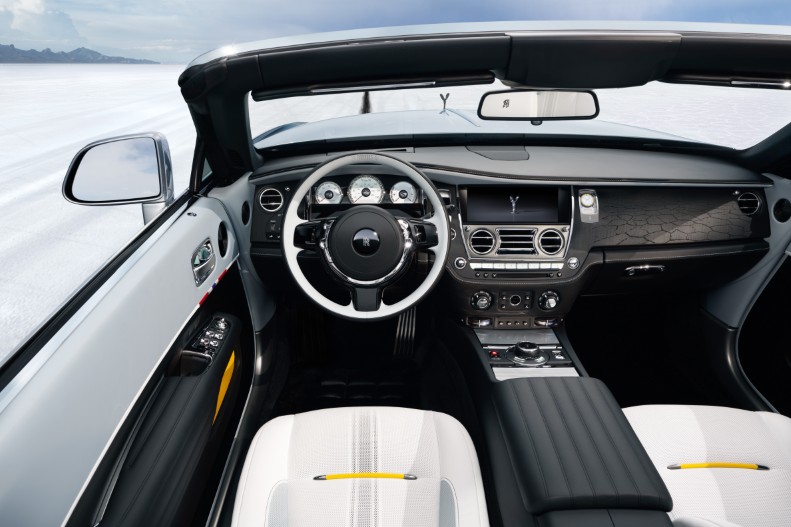 Photo Credit: Rolls-Royce
Meticulous Engineering
The exquisite exterior finish demanded unparalleled precision. Approximately 45 kilograms of paint are atomized onto an electrostatically charged body prior to oven curing, followed by numerous clear coats and hours of hand polishing to create a piano-like depth seldom seen in mass production. Signature components undergo a specialized black chrome treatment through co-deposition during plating, resulting in an ultra-thin surface polished to a mirror dark sheen—an embodiment of engineered darkness.
Within the interior, innovation continues apace.
Carbon fiber transforms from a structural component to a decorative masterpiece, interwoven with microscopically fine aluminum threads, layered with lacquer, cured over several days, and polished to a rich gloss. Bright components employ Physical Vapor Deposition treatment, ensuring longevity and color fidelity over time. The result is an immersive environment that seamlessly blends aesthetics with engineering integrity for discerning clients.
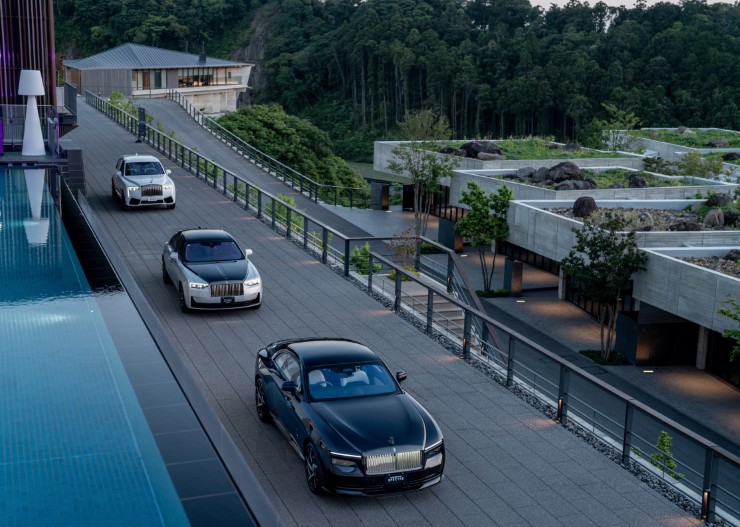 Photo Credit: Rolls-Royce
A Portfolio of Distinction
Black Badge made its debut with the Wraith and Ghost models before incorporating the Dawn and Cullinan, ultimately forming a distinguished lineup that encompasses the Spectre, Ghost, and Cullinan in Black Badge variations. Each model bears the infinity symbol, a homage to Sir Malcolm Campbell’s record-setting Blue Bird K3 hydroplane, signifying the seemingly endless power unleashed by Black Badge-tuned engines.
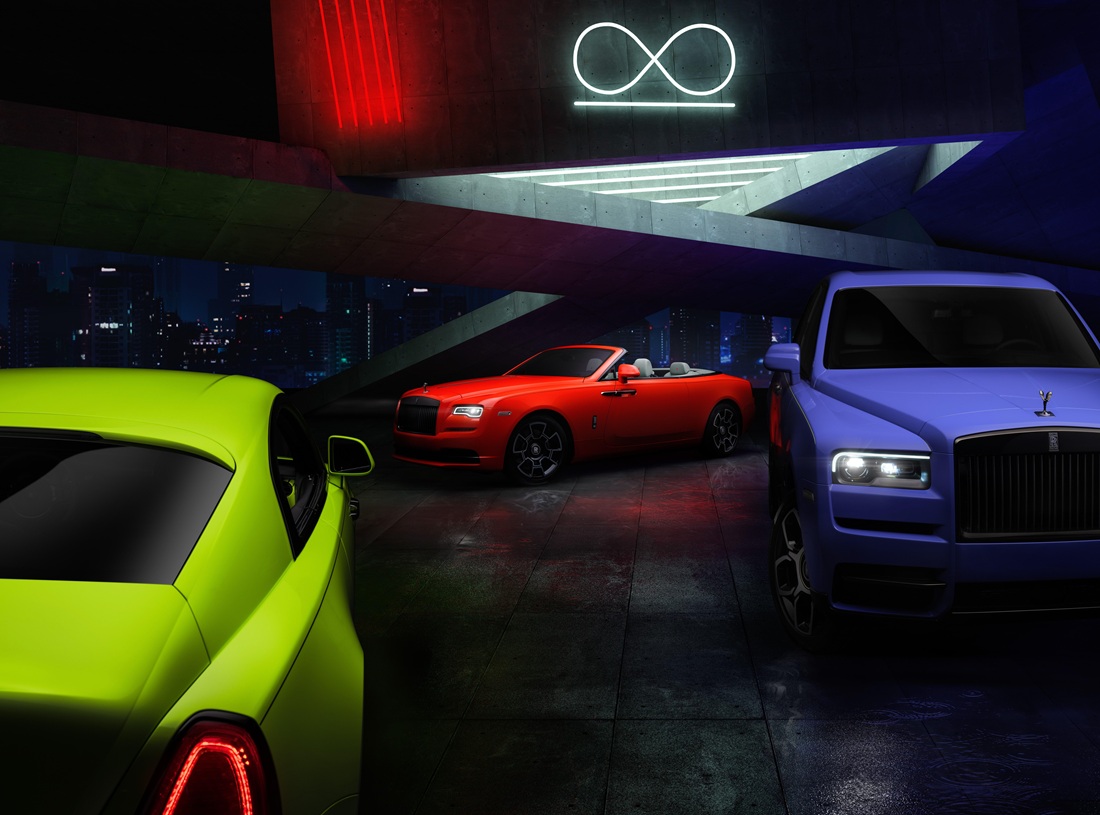 Photo Credit: Rolls-Royce
Shaping Cultures
Over the last ten years, the influence of Black Badge has transcended the confines of individual vehicles. Bespoke commissions have drawn inspirations from various realms, including vintage gaming, collectible sneakers, street art, land speed records, and the digital landscape. Projects such as Black Badge Adamas, Neon Nights, and Landspeed Collection showcase how deeply this alter ego has embedded itself in modern collector culture.
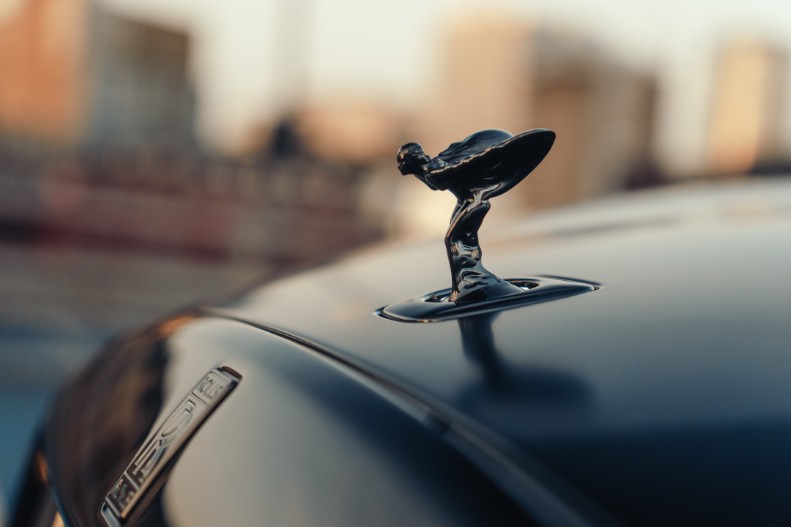 Photo Credit: Rolls-Royce
Future Trajectories
A decade later, Black Badge stands as evidence that tradition and rebellion can coexist as synergistic forces when driven by precision and confidence. It has broadened the brand’s relevance, attracted a younger clientele, and established a blueprint of aesthetics and experience that resonates within the luxury domain. As it embarks on its second decade, Black Badge continues to exemplify the enduring allure of individuality manifest in metal, lacquer, and uncompromising craftsmanship.