Sir Rocco Forte is a figure shaped by a lifetime in hospitality. Born in Britain to an Italian father, he carries the legacy of European service deeply rooted within him. Growing up amidst one of the continent’s renowned hotel dynasties, he worked in many capacities, earning recognition as a quintessential British hotelier. His exemplary contributions garnered him a knighthood from Queen Elizabeth II. However, the 1990s brought a significant setback when a hostile takeover dismantled his family’s empire.
Instead of succumbing to defeat, Forte embarked on a new journey.
This led to the establishment of Rocco Forte Hotels, a venture founded on lessons learned from childhood experiences with his father and the blending of his Italian and British heritages. He expresses, “I always had the best of both worlds.” The Italian influence nurtured an instinctive warmth and sociability, while the British aspect instilled a sense of discipline and the belief that service embodies dignity.
This duality forms the essence of his enduring work.

Embracing Local Identity in Hospitality
In today’s luxury hospitality landscape, a trend toward standardization has emerged, where guests come to expect identical experiences across various locations. This uniformity often strips away unique cultural nuances in favor of consistency.
However, Forte’s approach stands in stark contrast.
“Each hotel should have an individual personality that reflects its location,” he insists. The key is not in the design but in the service—“simple, comfortable, and straightforward,” characterized by genuine warmth and attentiveness rather than spectacle.
This philosophy shapes not just branding, but the entire concept. His hotels resonate with their cities, resisting suburban corporate identities. In a period marked by a luxury market prone to mass replication, his emphasis on individuality is refreshingly bold.

Legacy and Resilience
The demise of the Forte Group represented both public spectacle and personal struggle—a dismantling of a legacy established by his father, Lord Charles Forte. Yet, when Rocco Forte reflects on those times, he chooses to focus on what remains.
He recalls, “For my father, integrity was very important…how you treated staff, suppliers, customers.” This ethos of treating people right became the cornerstone of Rocco Forte Hotels, which he co-founded with his sister, Olga Polizzi.
Forte’s education in the industry began early, at just fourteen in the original Forte Group. These formative experiences not only grounded him but also influenced how he taught his own children about the business. Charles, Lydia, and Irene were introduced to the company similarly, receiving hands-on experience from an early age. “They took to it like a duck to water,” he notes with quiet pride.

Creating Cultural Touchstones
Forte’s portfolio of 15 properties frequently emphasizes historic preservation. Located in renowned cities, many are set within architectural masterpieces, like the Hotel Astoria in St. Petersburg and the Hotel Savoy in Florence. Yet, the unifying theme is not simply the buildings but a shared world perspective that highlights local culture, attentive service, and elegance marked by restraint.
“Guests do not seek the experience of a bland chain hotel,” he asserts. “They desire to engage with the locale, savor authentic flavors, and absorb the unique character of their surroundings.” To him, authenticity and individuality have never been more relevant.
Several properties exemplify this philosophy:

Brown’s Hotel — London
Established in 1837, Brown’s is a quintessential example of British luxury. Historically popular with figures like Queen Victoria for tea, the hotel exudes an air of polished sophistication. It’s notable as the place where Rudyard Kipling penned The Jungle Book, a heritage reflected in the Kipling Suite.

The Balmoral — Edinburgh
The Balmoral, a notable Victorian railway hotel, opened at the beginning of the twentieth century. Its clock tower holds a quirky tradition of running three minutes fast to ensure guests are timely. Inside, the design showcases Scottish heritage through tartans, rich fabrics, and colors inspired by the Highlands. The J.K. Rowling Suite, where the author completed her famous series, remains highly sought after.

Hotel de Russie — Rome
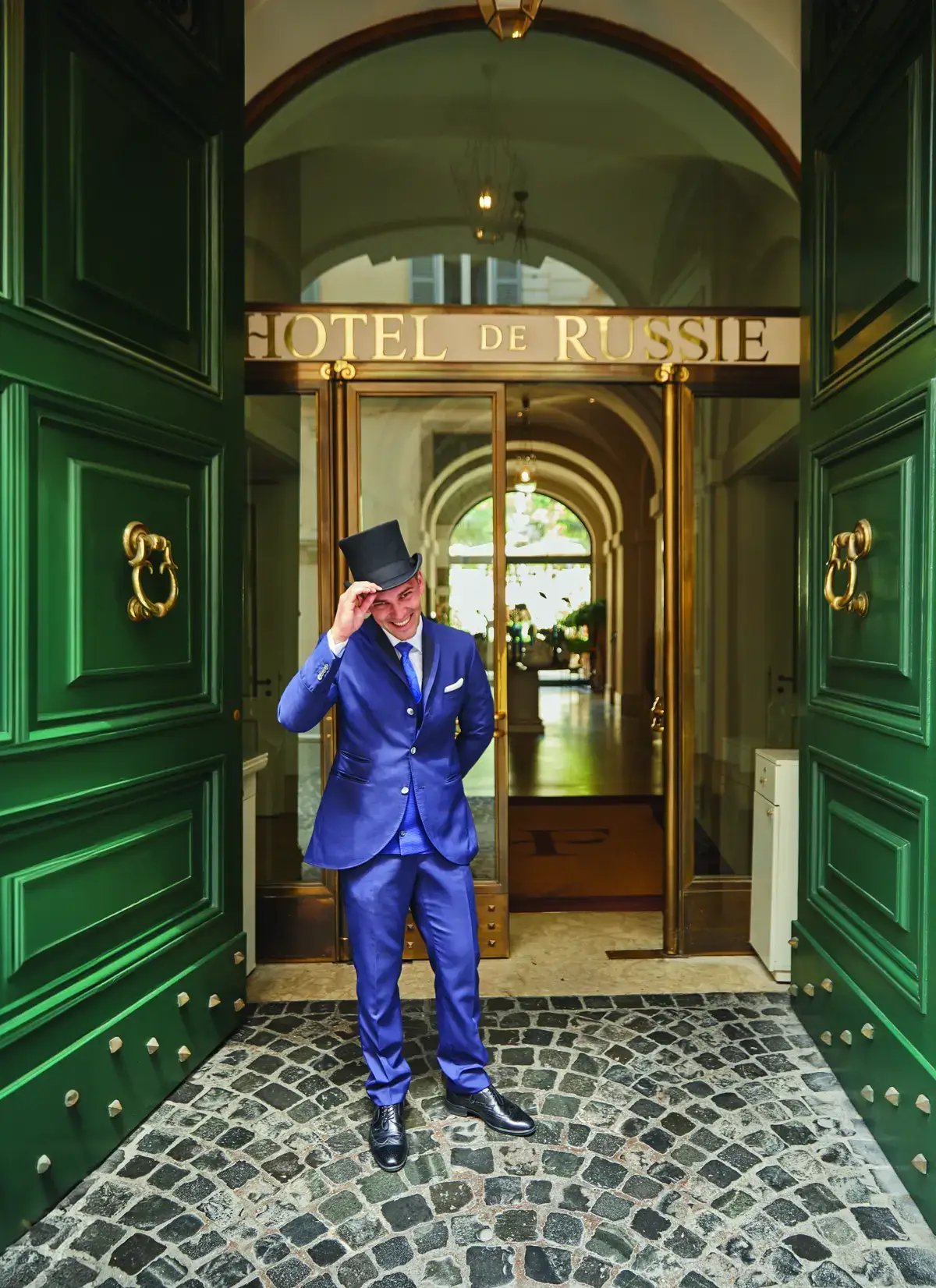
Hotel de Russie embodies Forte’s Italian essence. Constructed in 1816 and revitalized by the Forte family after its acquisition in the late 1990s, it reopened in 2000. Situated near Piazza del Popolo, a historical gathering place for artists, the hotel harmonizes its rich Roman roots with contemporary design. The renovation restored Valadier’s terraced gardens while modernizing the interiors without losing Rome’s spirit.

Villa Igiea — Palermo
Once a prized possession of the Florio family, Villa Igiea stands with Belle Époque sophistication, overlooking the Gulf of Palermo. Upon acquisition by Forte, the villa’s grandeur had diminished. Olga’s restoration efforts highlighted Sicilian craftsmanship, preserving original details from frescoes to garden designs. Today, it stands as a significant example of their philosophy and respect for heritage.
Forte notes, “There is now much more focus on local experiences than there was before. We excel at this due to our relationships with key individuals in each location. While the essence of hospitality remains the same, the kindness and will to serve and make every guest feel special continue to drive us forward.”

Forging Connections within Family Business
Forte’s British qualities emerge notably in his ability to face crises with composure, maintaining stability during personal and professional upheaval. Still, his Italian roots shine in his close family ties and appreciation for joy in the workplace. He rebuilt Rocco Forte Hotels alongside his sister and later involved his children as integral team members. Each contributes unique strengths; Charles leads development, Lydia manages food and beverage operations, and Irene has created her skincare line while guiding wellness initiatives.
“It is a joy to see them developing as they have,” Forte expresses, recognizing their growing responsibilities and contributions. Working alongside them, he finds satisfaction in witnessing what he has cultivated take shape through their efforts.

Upholding the Craft of Hospitality
Sir Rocco Forte has witnessed the rise, fall, and renaissance of a hospitality empire. In an industry often driven by consolidation, he remains a devoted practitioner of the traditional art of hospitality within a family-owned framework. His approach embodies the belief that genuine luxury cannot be mass-produced but requires a personal touch, evidence of a craft that endures through time.